

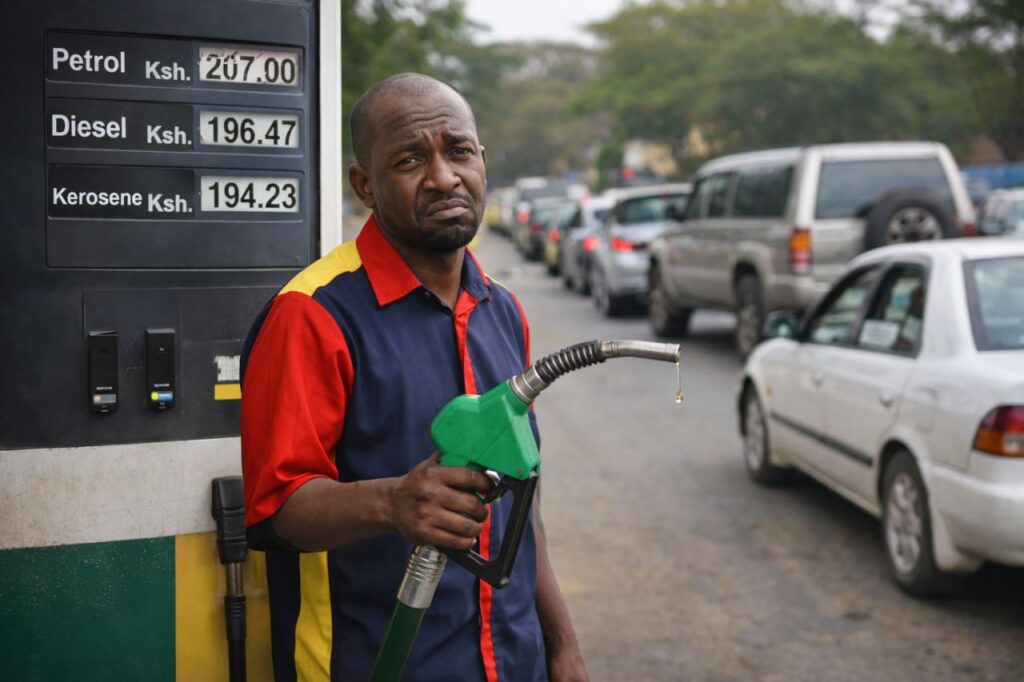
Nairobi—Fears of an impending fuel crisis are mounting in Kenya, with independent petroleum retailers warning that supply disruptions linked to escalating tensions in the Middle East could soon cripple distribution across the country.
The Petroleum Outlets Association of Kenya (POAK) says a growing number of filling stations are already experiencing shortages, with roughly one in five outlets affected. The situation, industry players warn, could deteriorate rapidly if global supply constraints persist.
POAK chairman Martin Chomba attributed the strain to rising international oil prices amid the ongoing Iran-linked conflict, coupled with domestic price controls that have squeezed margins for fuel marketers. Kenya’s energy regulator recently opted to hold pump prices steady for a month, despite sharp increases in global crude costs.
According to Chomba, the mismatch between rising import costs and fixed retail prices is discouraging supply, raising the risk of widespread shortages within weeks. He cautioned that unless urgent measures are taken, many outlets could run dry in the near term.
The disruption stems in part from reduced shipments through the Strait of Hormuz, a critical global energy corridor through which a significant share of the world’s oil and liquefied natural gas passes. Ongoing hostilities in the region have curtailed flows, tightening supply chains and pushing up prices worldwide.
Kenya, which relies entirely on imported fuel—largely sourced from Gulf producers under government-to-government agreements—is particularly vulnerable to such external shocks. Industry stakeholders are now urging authorities to review this procurement model and allow greater flexibility for marketers to source products from alternative suppliers.
Chomba warned that speculation and anticipated price hikes could also trigger hoarding, further straining availability at retail outlets. “The real shock is still ahead,” he said, noting that panic buying and stockpiling could worsen the crisis.
However, the Energy and Petroleum Regulatory Authority (EPRA) has sought to reassure the public. Its Director-General, Daniel Kiptoo Bargoria, maintained that the country currently holds adequate fuel reserves and indicated that a formal update would be issued.
Meanwhile, Nelson Koech, a member of the ruling party, blamed recent supply pressures on heightened demand driven by panic buying and speculative hoarding by some marketers anticipating future price adjustments.
With uncertainty persisting in global energy markets, analysts say Kenya’s fuel supply outlook will depend heavily on developments in the Middle East and the government’s willingness to adjust policy in response to evolving conditions.




More Stories
Africa’s Coastal Refuelling Boom as Global Shipping Reroutes
Massacre in Northern South Sudan Leaves Nearly 180 Dead
NGX Posts Moderate Gains in Tuesday Trading