

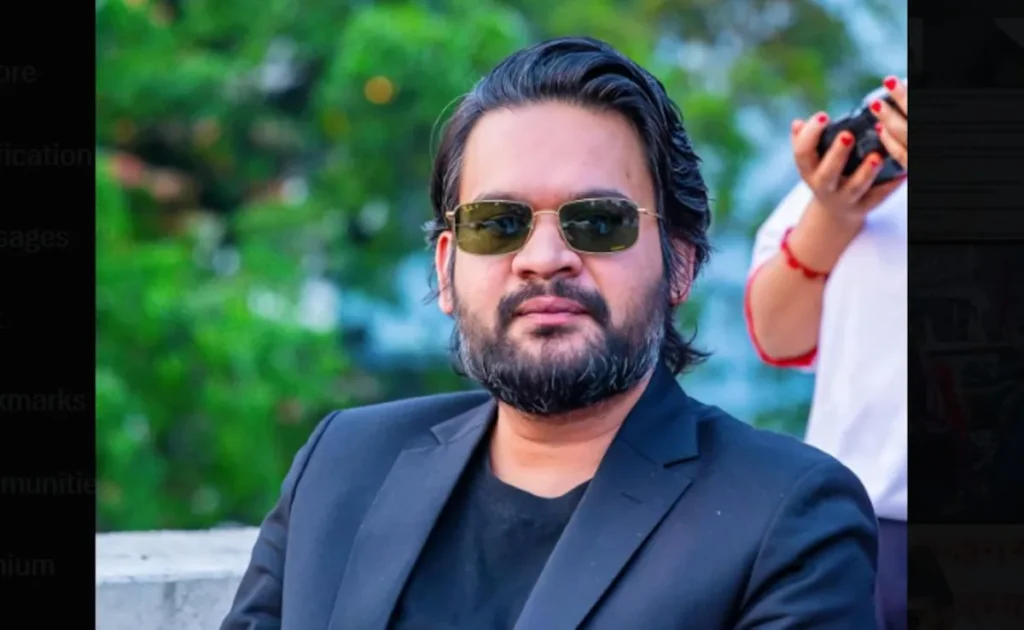
A rapper-turned-politician, Balendra “Balen” Shah, is on course to become Nepal’s next prime minister after his party took a commanding early lead in the country’s first election since last year’s deadly youth-led uprising.
Early vote counts released by Nepal’s Election Commission show Shah’s Rastriya Swatantra Party (RSP) leading in roughly 100 seats, putting it well ahead of its main rivals. The opposition Nepali Congress, currently trailing in second place, has already conceded defeat.
Final results from the election—covering 165 seats decided by direct vote and 110 allocated through proportional representation—are expected within days. Analysts say the RSP’s strong showing makes it likely to form the next government.
The election comes months after a nationwide protest movement in September that left 77 people dead and forced then-Prime Minister K.P. Sharma Oli to resign. At the time, Shah, 35, urged young Nepalis to prepare to lead the country.
“Dear Gen Z, the resignation of your killer has come,” he wrote to his millions of followers on social media. “Now your generation will have to lead the country. Be prepared.”
Shah’s rise has been one of the most dramatic in Nepal’s recent political history. He first gained national attention as a rap artist whose songs criticised the political establishment. In 2022, he rode that popularity to victory in the Kathmandu mayoral race, campaigning as an anti-establishment figure.
As mayor, Shah focused on improving urban infrastructure and public services in the capital, including waste management and healthcare delivery. His work helped cement his popularity among young voters and urban residents.
“Balen Shah is so popular that buses coming to Kathmandu now carry stickers saying ‘Headed to Balen’s city’,” said Bipin Adhikari, a constitutional law expert at Kathmandu University.
Unlike many of Nepal’s traditional political leaders, Shah has largely avoided the mainstream media, choosing instead to communicate directly with supporters through social media, where he has more than 3.5 million followers.
Analysts say that digital connection with young voters has been a key factor in his surge.
“What makes Balen special is that he stays connected with the youth through short messages on social media,” said independent political analyst Puranjan Acharya. “But governing the country will not be a cakewalk.”
Shah’s political platform centres on economic reform and job creation. His party has pledged to create 1.2 million jobs, reduce forced labour migration and raise Nepal’s per capita income from about $1,447 to $3,000 within five years.
The RSP manifesto also promises to more than double the size of the economy to $100 billion in gross domestic product and expand social protections such as nationwide health insurance.
Born to an Ayurvedic practitioner and a homemaker, Shah studied civil engineering in Nepal before completing a master’s degree in structural engineering in India. During his student years, he developed a passion for rap music, drawing inspiration from American artists such as Tupac Shakur and 50 Cent.
His politically charged songs struck a chord in Nepal, where roughly one-fifth of the country’s 30 million people live in poverty. One of his best-known tracks, Balidan (“Sacrifice”), released in 2019, has drawn more than 12 million views on YouTube.
Despite his popularity, critics say Shah’s success in national office will depend on whether he can assemble a capable team to reform Nepal’s bureaucracy, which has long been plagued by corruption and inefficiency.
“It needs experts and strong support,” Acharya said. “Without that, under the existing system, he could quickly run into serious difficulties.”
If confirmed as prime minister, Shah’s victory would mark a major shift in Nepal’s political landscape, long dominated by a small group of established parties, and signal the growing influence of younger voters in the Himalayan nation.



More Stories
Missiles Hit Israel as Diplomacy Falters in Escalating Iran Conflict
A Resurgent Arsenal: Is This the Season?
Ukraine, Russia Exchange 600 Prisoners in Two-Day Swap