

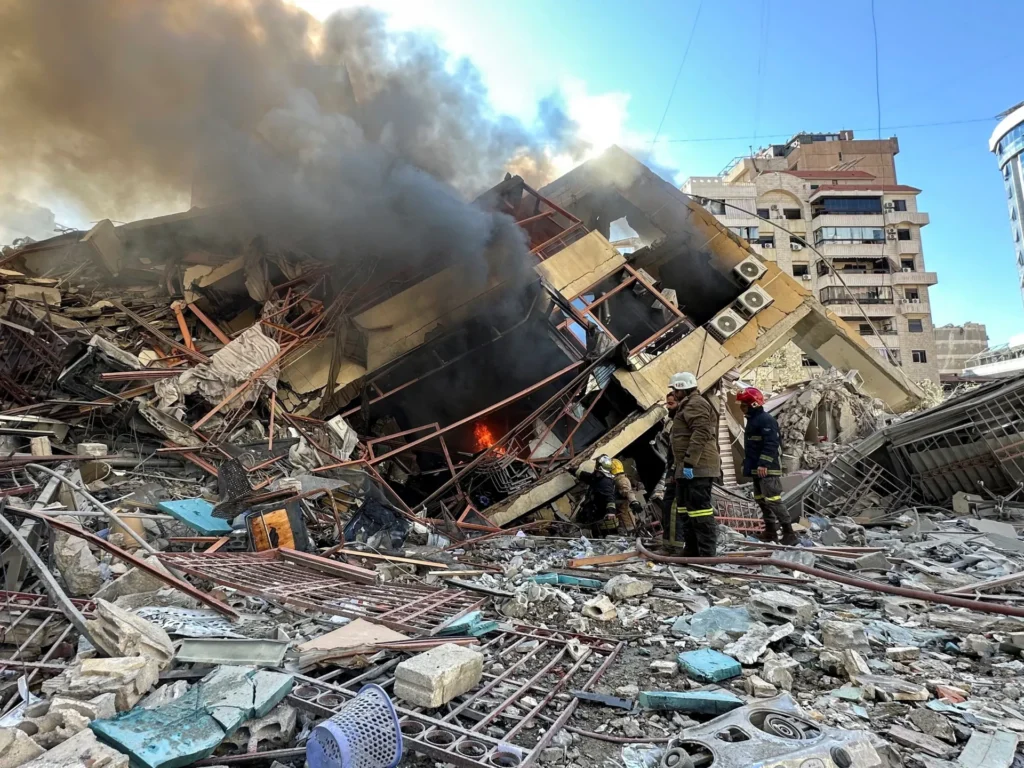
Civilian casualties feared as missile strikes hit residential areas in Tel Aviv, with emergency crews searching damaged buildings
Fresh doubts over diplomacy as Iran denies any talks with United States despite claims by Donald Trump
Oil market volatility deepens as tensions around the Strait of Hormuz threaten global energy supplies
multipleWashington/Jerusalem/Tel Aviv — Iran fired multiples of missiles at Israel on Tuesday, according to the Israeli military, sharply escalating tensions despite fresh diplomatic signals from Washington aimed at halting the widening Middle East conflict, Reuters reports.
Air raid alerts sounded across parts of Israel as emergency responders rushed to damaged sites in Tel Aviv. The country’s Fire and Rescue Service said efforts were underway to locate civilians feared trapped in at least one building, while others were found in shelters after nearby structures were hit.
The latest strikes came barely a day after U.S. President Donald Trump said “very good and productive” discussions had taken place toward ending hostilities. However, Iranian officials quickly dismissed claims that any negotiations had occurred, deepening uncertainty over prospects for a ceasefire.
Three senior Israeli officials, speaking anonymously, said Washington appeared keen to secure a deal but expressed doubts that Iran would accept U.S. terms in any renewed talks.
In Israel, Prime Minister Benjamin Netanyahu was expected to convene top security chiefs to assess both the latest Iranian strikes and the evolving U.S. diplomatic push.
Meanwhile, Israel intensified its own military campaign. The Israeli military said it carried out extensive airstrikes in Tehran, targeting key command centres linked to the Islamic Revolutionary Guard Corps’ intelligence operations, as well as missile storage and launch facilities. Iranian media reported multiple explosions across Tehran, with air defence systems activated in response.
Tensions have been further inflamed by threats to the Strait of Hormuz, a critical artery for global energy supplies. Trump said he had delayed a planned strike on Iranian power infrastructure for five days, contingent on Tehran reopening the vital shipping route.
Iran has warned it would retaliate against U.S. allies’ infrastructure in the region if attacked.
Markets, which initially rallied on hopes of de-escalation, turned volatile again as conflicting signals emerged. Oil prices, which had briefly dipped below $100 per barrel, rebounded, while the U.S. dollar strengthened amid renewed uncertainty.
Iran’s parliament speaker, Mohammad Baqer Qalibaf, rejected reports of negotiations with Washington, accusing the United States of spreading “fake news” to influence global financial and energy markets.
Still, diplomatic backchannels appear to be active. Sources cited by Reuters said countries including Egypt, Pakistan and several Gulf states are relaying messages between Washington and Tehran.
There are also indications that direct talks could take place soon. Officials familiar with the matter said Islamabad is being considered as a potential venue for negotiations, possibly involving senior U.S. figures such as Vice President JD Vance and Trump’s envoys, alongside Iranian representatives.
While no formal talks have been confirmed, analysts warn the situation remains highly volatile, with risks of further escalation outweighing fragile diplomatic efforts.


More Stories
A Resurgent Arsenal: Is This the Season?
Rapper-Turned-Politician Poised for Power as Party Leads Nepal Vote
Ukraine, Russia Exchange 600 Prisoners in Two-Day Swap